Are you registered to vote? In our wacky world of politics it’s important for everyone to make sure their voice is heard. And even more so today, with the bizarreness of everything from Kanye to Kavenaugh, we see a public push for people to vote.
Rohit Bhargava wrote in his book “Non-Obvious 2018 Edition: How To Predict Trends And Win The Future” about one trend in 2018 that has become obvious - Enlightened Consumption. Enlightened consumers continue to see their role as employees, audiences, and voters as a chance to make a statement about their social beliefs and the world they chose to live in.
And brands are doing the same. On November 6th, both Uber and Lyft are offering free and discounted rides to help get voters out to their polls. You see, Midterm elections have lousy turnout with maybe 4 in 10 Americans showing up. According to Lyft, 15 million people were registered to vote in 2016 but didn’t because they had transportation issues.
Uber is using it's app and offering a “Get to the Polls” button helping users find their polls and arrange for transportation to them. Lyft is using their “The Ride to Vote” Campaign to get the word out about their free and discounted rides as well as help finding polling locations.
It really shouldn’t surprise you that 86% of consumers think brands should take a stand on social issues. But don’t jump too fast. A majority of consumers (64%) also believe your efforts should be closely aligned to your organization’s products and services.
There’s a lack of hope and confidence in our world today, as discovered in Edelman's Insights Survey, with 53% saying the system is failing. Only 15% believe it’s working. There’s a place for your brand to take a stand. Lyft and Uber did. They identified a social problem and chose to use their product to make a practical difference.
Ready to make a stand? Consumers are looking for you to do so. Brave brands take a stand and speak up for what they believe. Just make sure it’s relevant to your business.
Marketers discuss the future of smart data collection and interpretation
Sometimes you just want a Diet Coke. Sure, it’s made with artificial sweetener, but it’s still a soda. Plus, you can enjoy it guilt-free. In the same way, advances in AI marketing trends may be artificial, but they’re no less effective. You’ve already heard me introduce some ideas about the ways AI will be used for marketing purposes in this blog, and now a new study details the reasons marketers are so excited for what’s ahead.
Here, I’ll break down some of the key points of the study, and give you my analysis on the ways AI will soon change the way we interact with data.
What: “Doing More With Data: Discovering Data-Accelerated Revenue Traction,” a study based on a survey conducted in partnership by IBM and the CMO Council in June, 2018
Who: The survey polled 165 executives in marketing, supply chain and commerce roles at a number of large companies like Samsonite, REI, The Body Shop, AT&T and many others.
People First: The study showed that customer engagement is a 24/7 gig, with social media and advances in technology meaning that data is available round the clock.
Lagging Efforts: Only seven percent of respondents felt they were exceeding expectations in meeting the needs of their customers. Nearly 40 percent of CMOs thought their current customer engagement strategies were a mixed bag, not yielding consistently positive results.
Barriers: Across silos, all respondents agreed that the biggest barriers to more effective data collection, interpretation and implementation were the “Three Ts”: tools, talent and time. Many companies were struggling to find the right technology to optimize their data management, while others felt they didn’t have the resources to hire or train their people to operate more effectively. Still, others said it all boiled down to not having enough time to dig into the data and create action steps based on the findings.
Mundane in the Membrane: According to respondents, their staff spends a majority of work hours completing mundane tasks like manipulating spreadsheet data - tasks that could be taken care of by an AI program, leaving valuable time for analysts to actually analyze and create strategies based on the data.
Real-Time Rewards: The biggest upside to AI as it relates to data is that it can collect, process, analyze and make recommendations, all in real-time. This will empower marketers to make decisions and respond to crises quickly, efficiently and effectively, as well as help lay the foundation for long-term marketing strategies and communications plans.
The Future is Here: Out of the survey respondents, 77 percent say they plan to implement AI data systems within the next year.
Rick Bingle is the senior vice president of supply chain at outdoor retailer REI. He says the company has been significantly impacted by its use of AI technology. The automated service doesn’t replace the job of analysts. Rather, Bingle says it empowers them. He says, “AI enables us to address many more issues each day, and it accelerates the ability for our analysts to extract, communicate and potentially change strategies. Analysts now have tools to visualize data and bring it all together in one queue, thereby facilitating cross-functional collaboration.”
AI is here, and it’s time to get ready for it. AI is going to be key throughout the rest of 2018 and into 2019, especially in helping companies ingest and analyze data on-demand. It has the ability to free up manpower and man hours to do the real dirty work of marketing - creating impactful and effective strategies to build and strengthen brands. Companies utilizing AI can expect to see more meaningful customer engagement, smoother operations, and more powerful ROI from their campaigns. So, sit back, crack open that Diet Coke, and do a little research on why artificial is the new natural.
And as always, all of us at Willow Marketing are here to help you navigate these new marketing trends. AI is not only for Fortune 500 companies. It can be an incredible asset to your business or organization, and we can help introduce you to some tools and techniques that will help launch you into the world of AI. Give us a call or send an email to set up a time to chat.
Ever gone house hunting? If so, you may have been asked by a realtor about your style preferences. Mid-century ranch? Colonial two-story? Cape Cod or bungalow? Whatever your taste, the architecture of a house is what speaks to you. It tells you how the house is built and what you can expect to find on the inside.
In the same way, brand architecture defines how a brand appeals to consumers and offers hints on what the brand is made of internally. The two primary strategies when discussing brand architecture are the Branded House and the House of Brands. Though they sound similar, in reality, they are built on very different foundations.
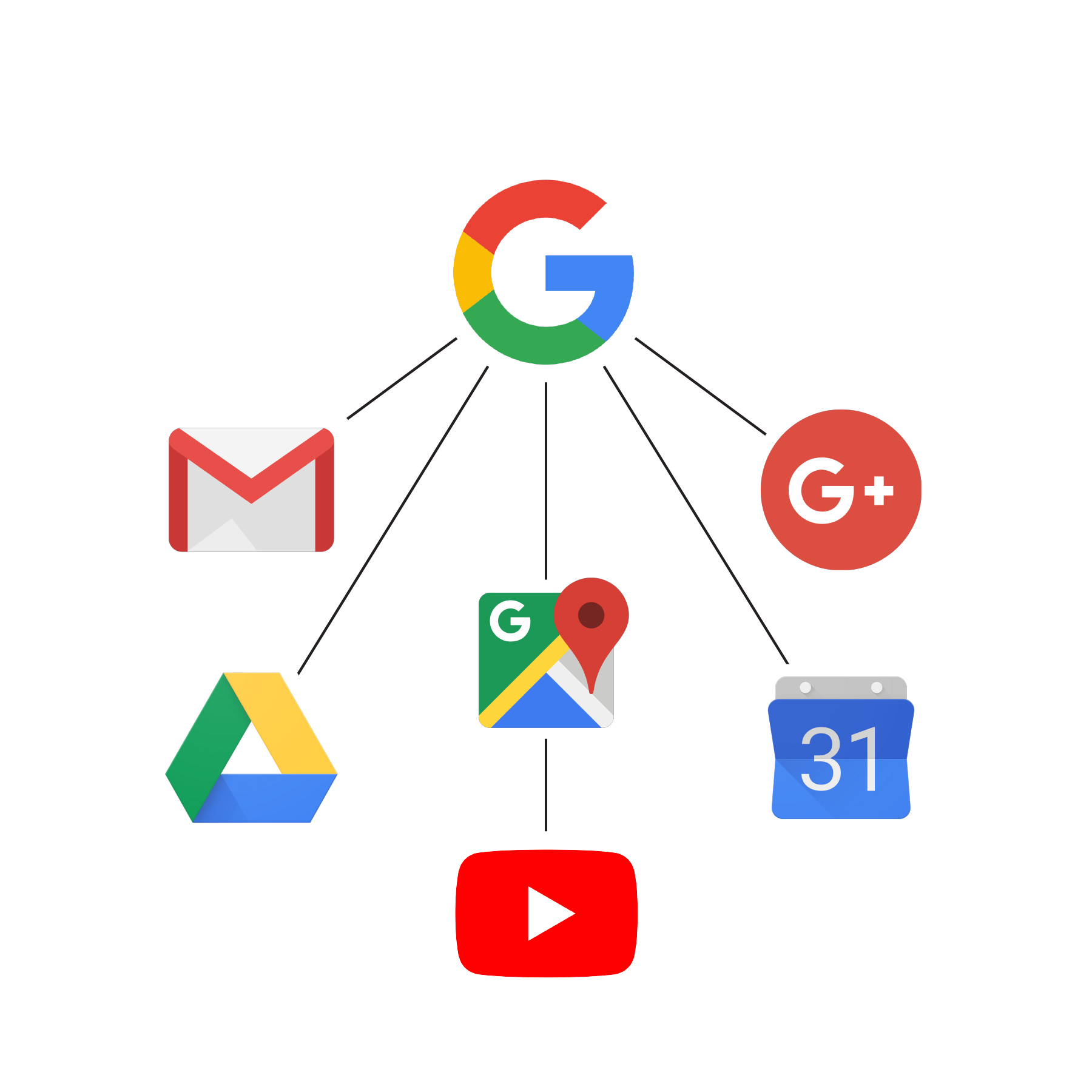
A Branded House is the most common form of brand architecture. Major brands like Google and Apple are exemplary models of this style, wherein both have smaller sub-brands, but all are marketed and operated under the umbrella of the parent brand. For instance, you might check for appointments in your Google Calendar. Later, you write a message in Gmail. Tomorrow, you’ll complete a budget in Sheets. Each of these products is a sub-brand of the parent company, but they do not operate independently of one another, and they never overshadow the primary brand. FedEx is another company that has done an excellent job with their branding and has certainly reaped the benefits of taking the Branded House approach. Their brand lineup includes not only FedEx Express, but FedEx Freight, FedEx Ground and FedEx Kinkos.
Upsides
A Branded House strategy offers numerous benefits to companies that offer multiple services or products under one branded entity, including:
Pitfalls
Though Branded House strategies make sense for many businesses, there are still a number of potential issues to consider.
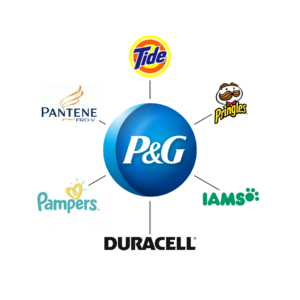
A House of Brands is the exact opposite of a Branded House. Whereas a Branded House maintains the focus on a single, well-known and consistent brand, a House of Brands is home to numerous brands, each independent of one another, and each with its own audience, marketing, look and feel. P&G and Unilever are great examples of a House of Brands. For instance, you wash your laundry with Tide, not with P&G’s Tide Detergent. When you’re a teenage guy trying to impress someone, you bathe in Axe, not in Unilever Body Wash. A House of Brands works well for many large consumer companies, but it’s not for every brand. Marriott is another example of an organization that has successfully taken this approach to their portfolio of brands over the years including brands from the high-end Ritz-Carlton to business-class Courtyard.
Benefits
A House of Brands strategy can offer businesses with a variety of offerings the freedom and flexibility to flesh out each individual brands. Benefits include:
Pitfalls
Maintaining a brand isn’t easy. Maintaining many of them can seem nearly impossible. There are many considerations to be made when constructing a House of Brands.
The Question of Hybrids
While House of Brands and Branded House are the two most common brand architectures, there are certainly hybrid companies out there. Most often, they are big businesses with a lot of brand cache and long histories of maintaining trust with consumers. Prime examples are Coca-Cola and Pepsi. Each is known for their token product offering, but each company is also parent to numerous other stand-alone brands.
Marketing Considerations
So, why does brand architecture matter to you? Just like your house, your brand’s architecture tells a story. It appeals to different audiences in different ways and is an indicator of what consumers will find within. It builds perception and creates relationships that are crucial to the success of your business. Knowing how your brand interacts with consumers is the key to determining the right brand architecture for your company.
Your strategy also impacts your business internally. It will have an impact on how you create budgets, the operating structures of your teams, and especially, how you communicate, both within and outside the business. Expect that, as your company acquires new business lines and brands, your internal structure and operations will change, sometimes drastically. Being prepared with a strong foundation will help keep you on your feet, even when everything around you is shifting.
Perhaps you operate a House of Brands but are finding that more consumers are building trust with your parent brand, and a Branded House may make more sense. Or maybe you’re just starting out and aren’t sure what style and strategy works for your business and the people you serve. Wherever you are in constructing your brand architecture, we at Willow are here to act as your contractors. We’ll help you lay the right foundation and build a house that will welcome all who enter. You’ve got the blueprint; we’ve got the hammer and nails. Let’s get started.
If you’d like to learn more about brand architecture and how it impacts your business, get in touch with Brad.
How to manage and market your online reputation for better consumer relationships
Joan Jett didn’t give a &$%# about her bad reputation, but those of us in the business world don’t have the same luxury. Our reputation can draw customers in… or turn them off before we’ve even had a chance to prove ourselves. Our online reputation is impacted by multiple factors, like customer reviews, ratings, recommendations, and the opinions of heavy influencers. By learning to utilize online feedback as important touchpoints that will affect more than the user involved, we can both protect and grow our businesses.
If you keep up with the blog, you might remember I recently wrote about the “truthing” trend in marketing, in which consumers are more interested in transparency and more passionate about patronizing businesses they trust. But here’s the hitch: consumers don’t want you to earn their trust; they want to find out if you’re trustworthy on their own. It might be checking out your Google reviews, seeking a recommendation on Facebook, or reading testimonials. However they’re gauging your trustworthiness and perceiving your reputation, it’s important to be in that space, with the right voice, and the right influencers.
When someone says something negative about us, our first instinct is often to become defensive. Getting defensive, though, has a way of blowing up in our faces (take poor, angry Amy and her bakery, for instance). Negative reviews and poor ratings can hurt our business and hurt our feelings, but no matter how painful (or just plain wrong), every dissatisfied customer is an opportunity for positive change and growth. So how do you stay on the sunny side when there’s a storm coming?
When it comes to your business, don’t build a wall; install a window. The more up-front you are with your practices, values, and beliefs, the more proactive you can be in mitigating negative feedback.
So, that’s not exactly how the saying goes. But trying to beat an angry customer at their own game, though it may give you a short-term win, will only end with everybody losing. Take the criticism, honestly analyze the feedback, and ask what you can do to make it right. Do so openly and transparently (see above), and make sure the world sees you’re willing to smother the flames, rather than fan them.
Online reputation management is a grim world of crisis mitigation and worst-case scenarios. Instead of reacting on the fly when emotions are running even higher than the stakes, commit to taking a proactive approach with reputation marketing. According to an article from Forbes, digital word-of-mouth is one of the strongest tools in a company’s arsenal… if they know how to market and manage it.
But, no matter how prepared or optimistic you are, bad reviews happen. So, what then?
Some would have you believe that aggressively removing or burying negative reviews or ratings is the way to improve your reputation. And while it may garner you more stars on search results, it doesn’t address the crux of the problem. Instead, look at negative feedback as an opportunity to fix something that’s broken, and come out stronger in the end.
For a while now, social influencers (celebrities or heavy users) have leveraged large followings to promote products or services, at great benefit to companies willing to supply said services to them for free (and typically with plenty of additional compensation). Recently, however, businesses are becoming savvier about some less-than-ethical practices employed by influencers to boost their followers, like mega brand Unilever. While using influencers is a great way to communicate your trustworthiness, make sure to do your due diligence in examining and vetting the influencers that are reaching your end consumers.
Not a buffet; more like a light snack. Look, no matter how well you run your business, someone out there won’t be happy with you. Ignoring them might make them go away… but it also might make them grab their megaphone of choice (Facebook, Twitter, Yelp, etc.) and put your company on blast. Let other users see that you hear and acknowledge their feedback, no matter how unfair it may be. This shows that you’re engaged, open, and willing to work through problems.
Ultimately, you set the tone for your business, and that shapes its reputation. If you respond to criticism with explanations, finger-pointing or defense mechanisms, you may turn a molehill of a problem into an insurmountable mountain. Get honest with yourself about negative feedback, and seize the opportunity to better your business and better your relationships with the people who make it a success.
Want to learn more about how Willow Marketing can help you manage and market your online reputation? Get in touch with us and we’ll work on a plan tailored to your needs.
Reaching your audience in the post-truth era of alternative facts
One of my favorite marketing soothsayers is Rohit Barghava, a former Ogilvy exec-turned-bestselling-author, whose annual books on the latest marketing trends are consumed by more than a million readers. Each year, Rohit compiles a list of trends that he curates over the course of the year, based on a number of factors related to our society, political climate, culture, and demographics. In the 2018 edition of Non-Obvious: How To Predict Trends And Win The Future, one of the trends that struck a chord with me was what he named, “Truthing.”
It’s no surprise that finding the truth is at the crux of this trend. After all, a few years ago, phrases like, “fake news,” and “mainstream media” weren’t part of the average person’s everyday language. Now, skeptical users are wary of sensational headlines that have a ring of dishonesty, or brands that make far-fetched claims. Sure, you’ll always have that Facebook friend who posts every conspiracy theory ever memed, but overall, media consumers are becoming (or trying to become) more savvy in their analysis of what’s true, and what’s not.
If it walks like a duck…
While having consumers that are more alert and aware may sound like a good thing, Truthing comes with a major downside. Users, buyers, and consumers might want the truth, but the truth they want is likely to jive with their beliefs and environment. So, the “truth” becomes subjective, based on who’s telling - and who’s believing - it.
A kinder, gentler approach...
Pompous, loud news anchors are going the way of the dinosaurs. In their place, media curators that compile news tidbits and present them in a friendly, easily-consumable way are taking over (think theSkimm). Simultaneously, brands that appeal to emotions and shared experiences may resonate more with consumers. This supports yet another one of Barghava’s Trends for 2018 appropriately named "Brand Stand" - a principled view of the world that an organization/leader truly believes in and supports with actions. (More on this in a future post.) In the search for truth, it seems tone and presentation matter almost as much as the facts.
The truth according to everyone...
A few years ago, User-Generated Content (UGC) was the big buzzword in advertising. Now, Barghava says User-Generated Truth (UGT) is in a position to become the way many Americans consume news. Thanks to easily accessible technology and the rise of live streaming platforms, social users now have unprecedented access to the world around them, whether it’s seeing first-hand the journey of a Syrian refugee, or watching a video of a confrontation or protest as it’s happening.
If you interact with the public, you’ve likely already seen how Truthing is influencing consumer habits. There are a few key takeaways to keep in mind if you want to use the Truthing trend to your advantage.
Nostalgia = comfort
“Old-school” products are becoming consumer darlings once again, with demand rising for analog products like cameras that use film, LPs, and record players, and even mobile phones that (gasp!) don’t include internet access. The reason why? In our quest for the truth, we also want to find comfort. And since the truth is often distinctly uncomfortable, we look to the things that take us back to a happier, simpler, more naive time. Even if you aren’t selling a product, there are ways to incorporate nostalgia into your messaging, whether it’s the look, the language, or the music you use.
Transparency is everything
If I’m a coffee lover (I am, though it’s decaf these days), and also passionate about ecology and sustainability, I might give my business to a company that offers me a live-feed of the work happening at their fair-trade, responsibly cultivated farm. I might buy clothing from a manufacturer that can prove it pays employees a living wage. Or I might seek health care from a provider that leverages the testimonials of actual patients. In every case, the key is transparency. A truth-seeking consumer isn’t distracted by flash and sizzle; he/she wants to be a valued and integral part of their own buying journey.
Truth in branding
Being authentic, as you can probably guess at this point, is more important than ever. And it’s even more important for your brand to be authentic. At Willow, we take a lot of pride in the brand we’ve built over more than a quarter of a century. But the truth at the heart of our brand isn’t just what we think of it - it’s influenced by the perceptions, interactions, and reactions of every customer with whom we do business. The same is true for each of our clients. As we guide them through the branding process, we don’t just base our choices on their perceptions. Instead, we look for the gaps between their truths and the truths of the people they serve. That’s where the “brand truth” lies. Around here, we often say, “You can’t read the label if you’re inside the jar.” If you’re only looking at your business from the inside, you’re probably missing quite a bit. That’s why we help clients look outside the jar. A combination of qualitative and quantitative research can help us to better understand how others perceive what's on the label.
Get ready to hear more about Truthing, and how it can affect your brand, as we get further into 2018. We may be in a “post-truth era,” but that only means that the facts - and how they’re delivered - are more important than ever.
Give me a shout if you want to talk about how we can help your business use the Truthing trend to your advantage. And if you want to read more about other marketing trends of 2018, you can learn more about Rohit Barghava and Non-Obvious here.
5 Ways Artificial Intelligence is Going to Impact Your Business
Will 2018 be the Year of the Robot Revolution?
As owner and CEO of Willow Marketing, I do my best to stay on top of the latest industry trends. In our increasingly fast-paced, tech-evolving-at-the-speed-of-light society, that’s not always an easy task. One thing is becoming increasingly clear: today’s evolving technology, especially advances in artificial intelligence, will have an impact on your business, so you can’t put off learning about it until tomorrow. When understood and put to good use, these now-trendy techs will soon become SOP… and it might just help your business run smoother and easier. So, just how and where will you be seeing AI and other technologies creeping into your day-to-day routines?
#1 Predictive Marketing
Business intelligence is a buzzword you might be hearing more and more, and within that realm, you’re likely to hear talk of marketing forecasting. Through data collection, AI is able to predict the potential success of your company’s marketing, whether it’s a single email or an entire advertising campaign. So, before you invest in a large project like video production, you may soon be consulting your own AI Magic 8 Ball to determine whether it will be a hit or a flop.
#2 Voice Recognition
Craving Chinese? Just ask Alexa to have some lo mein delivered from your favorite restaurant. But what about when your clients or customers are craving something you can deliver? Wouldn’t it be convenient if they could get information, place an order, or contact your offices just by asking their Google Home or Amazon Echo? The technology is already here, and it’s expanding with every passing day. As more brands race to compete in the “smart home” market, there will be more opportunities for businesses and organizations like yours to get on-board and simplify your user’s experience.
Another use of voice recognition technology that you’ll be seeing more of is utilizing artificial intelligence as an office assistant of sorts. Just as Apple created Siri, Voicera has created Eva, a virtual assistant that uses “Predictive Highlights” to take notes during business meetings - on the phone or in person. In fact, I just used Eva during our Willow Better U event!
#3 Programmatic Advertising
Next time you’re scrolling through your news feed on Facebook, take a second to pause at the sponsored content. While some of it may not appeal or apply to you, some of it is eerily relevant. No, Facebook isn’t spying on you (we don’t think), it’s just using programmatic advertising to target you in real-time with products and services on which you’re more likely to convert. Programmatic advertising will become standard for many companies throughout 2018, with live bids for online inventory across social platforms, websites, mobile, and more. Marketers will be able to collect data to create hyper-targeted campaigns, and then purchase media that will hit those targets at the best possible time.
#4 Content Generation
While most of your content will benefit from the personal touch of a skilled and knowledgeable writer, you may soon have the option of creating ads, articles and social posts through artificial intelligence. By feeding the AI a specific set of information, marketers can then ask it to generate certain types of content pieces, from product descriptions to Facebook posts.
#5 Customer Insights
The biggest thing to remember when it comes to AI is what’s on the other side of that technology: human beings. AI is now being used to customize experiences and deliver tailored products, services or information to a user’s needs and wants. Using machine learning, companies can set up what are called, “recommendation engines.” For instance, think about how Pandora always seems to know the exact Queen song you’ve been wanting to hear. Or the way Netflix analyzes the most intricate data (when you rewatch a scene, or when you skip to the end) to suggest new content you’re likely to consume.
It boils down to this: AI is here, and while the robots aren’t taking over (yet!), the technology can enhance the way you market your business, increase the actionable insights you take away from your research, streamline your advertising and increase ROI. If it all sounds more like sci-fi than real life, don’t panic. At Willow, we’re here to keep an eye on the trends and tech, and help you discover ways your business can step into the future… today.
Interested in learning more about how Willow could help implement some of these for your business? Reach out.

It was suggested I write a blog post marking Willow's 24th year in business, which will be celebrated on March 1st. I never thought writing a blog post would be so hard. And, as I tend to do, I procrastinated. The more I thought about it, the more I didn't like the idea. The more daunting the task became. How do you summarize 24 years in a blog post?
So, I decided to not write a blog post at all. At least not one recognizing and memorializing the milestone. Not one celebrating the anniversary date of our founding. Instead, I decided to write a thank you note. Because there is so much I have to be thankful for in the last 24 years. And because my Mom always told me to write thank you notes—personal hand written notes. So here it is: