In the dynamic landscape of association management, the rapid adoption of artificial intelligence (AI) presents unparalleled opportunities for innovation and efficiency, something that we all seek in our professional roles. As association executives, you are well aware of the transformative potential AI holds for member-based organizations. However, alongside these promises lie critical legal considerations that demand someone to be knowledgeable to navigate. In this short blog post, we attempt to cover some of the nuanced legal landscape surrounding AI implementation within professional associations, providing insights and actionable strategies to help executives in making informed decisions.
In professional associations, where the care of member data is paramount, a nuanced approach to data privacy and security is indispensable. Regulatory frameworks such as the General Data Protection Regulation (GDPR) and the California Consumer Privacy Act (CCPA) mandate stringent adherence to privacy standards.
A periodic and comprehensive privacy assessment is not merely a compliance requirement but a strategic imperative. Executives should proactively align data protection policies with evolving regulations, fostering transparency in communication to build member trust. Establishing a robust data security infrastructure ensures not only legal compliance but also reinforces the association's commitment to member confidentiality.
For professional associations committed to diversity and inclusivity, the inadvertent biases by AI algorithms pose a real concern and could be one of the top issues to be aware of with the use of AI. Association Executives have to collaboratively engage with AI developers to implement robust bias mitigation strategies.
The strategic imperative here lies not only in mitigating biases but also in optimizing decision-making processes. Rigorous testing, ongoing monitoring, and an agile feedback loop are essential components of this strategy. By cultivating a culture of fairness and equality within the organization, executives underscore the association's commitment to serving members equitably.
The integration of AI introduces new challenges in the realm of intellectual property (IP) rights and liability. Association leaders must approach this arena with a forward-looking perspective, envisioning the association as a hotbed of innovation where AI serves as a prolific contributor.
A proactive approach involves periodic reviews and updates of IP policies, explicitly addressing AI-generated content ownership. Association executives should consider the establishment of processes in their organization that not only safeguard but leverage AI-generated intellectual property. By fostering an innovation-centric culture, associations can position themselves as leaders in leveraging AI while diligently managing associated legal considerations.
Transparency is a foundation in the ethical deployment of AI within professional associations. Association executives must prioritize transparency and accountability in AI systems, recognizing that the decision-making processes often operate as complex black boxes. Strategic implementation of processes and mechanisms that demystify AI decisions is crucial. So essentially, determine how and when you plan on using AI and for what roles and activities will AI be utilized within your organization. And then share this with your membership.
Executives should actively communicate the rationale behind AI-driven decisions, especially when these decisions have a profound impact on member experiences. This commitment to transparency not only aligns with legal expectations but also enhances member confidence in the association's ethical and principled operations.
Executives leading professional associations understand the sector-specific regulatory landscapes that govern their operations. The integration of AI mandates a meticulous approach to compliance with industry-specific regulations, ranging from healthcare-related statutes to financial and educational mandates.
Staying abreast of industry-specific regulations is an integral part of the executive's role. Executives should proactively align AI practices with these standards, ensuring not only legal compliance but also contributing positively to the advancement of the association within its sector.
As association executives chart the course for AI integration within professional associations, a sophisticated understanding of the legal considerations is paramount. Data privacy, bias mitigation, intellectual property protection, transparency, and industry-specific compliance are not isolated challenges but interconnected facets that shape the ethical and legal landscape of AI adoption. Here is a summary with some key takeaways that you can share with other peers in your organization.
Periodically assess and update privacy policies to align with evolving data protection laws. Communicate transparently with members to build and maintain trust.
Collaborate with AI developers to implement robust bias mitigation strategies. Foster a culture of fairness and inclusivity through rigorous testing and ongoing monitoring.
Proactively review and update IP policies to address AI-related considerations. Establish mechanisms for safeguarding and leveraging AI-generated intellectual property, fostering a culture of innovation.
Prioritize transparency in AI decision-making processes. Implement mechanisms that allow members to understand how AI systems operate and decisions are reached.
Stay informed about industry-specific regulations and align AI practices with these standards. Regularly update policies to reflect changes, ensuring a proactive approach to legal considerations and positioning the association as a leader within the sector.
Interested in learning more about how Associations are embracing AI and what an agency partner can bring to the table, please fill out this form and we’ll contact you soon.
Not ready to connect? Check out our case studies.
As marketers, we’re always trying to learn more about our target audiences. Who are they? Where do they live? How do they learn about the products or services they need? What articles on our website do they download? How long do they stay on a webpage before making a purchase?
The questions we can ask and insights we can gather through research are almost endless. But one specific kind of research let’s us go beyond the “who” and “what” – and tells us “why” they do almost everything they do: attitudinal research.
Attitudinal research is qualitative research that’s used to understand an individual’s opinions, beliefs, feelings, or thoughts. It measures the importance of certain attributes of products, services, or organizations, and in turn, delves into how those factors impact how the consumer thinks or feels.
This research offers a closer look at the mindset of your audience to understand what makes them tick – and in turn, can help you better communicate with and serve them.
Most of us are familiar with behavioral research: It takes a look at an individual’s actions, and measures or quantifies WHAT they do – your website clicks, online purchases, or email forwards, for example. This type of research does have many benefits. But unfortunately, behaviors change – and behavioral data doesn't tell us the “why” behind “what” those users are doing.
On the other hand, attitudinal segmentation tells us more of the story, revealing the emotions and feelings motivating those behaviors. Attitudes are more deeply rooted and don't change frequently, which means this data can give us great insights into the minds of our members, and a rationale behind why they make the decisions they do.
So, why should you consider including attitudinal research in your 2022 strategy? Because it reveals fascinating and practical insights – for example, what kind of content your audience segments find compelling, what sources they’re using for information, and the challenges they want to help solve.
Because it helps categorize attitudes and track sentiments on important issues – like a brand or organization’s approach to DEI, for example – attitudinal research can help you decide where to focus your efforts, what issues to address first, and how to prioritize your actions.
The results of your attitudinal research can also help direct your messaging, and allow you craft communications that are more persuasive, that resonate more deeply with your audience, and that speak to your end user’s unique needs.
One important thing to keep in mind, though: Attitudinal requires critical thinking to sit down and understand why people are feeling the way that they are. These are qualitative insights that need to be interpreted in order for them to be used. It’s not as quick and easy as assessing demographic or behavioral data, but the results are more nuanced, and can help you truly add value for your end user, and meet them where they are.
Want to learn more about attitudinal research – or even better, to sign up to participate in our 2022 study? Let’s talk!
Nothing this year is quite like ever before – even the weather in Chicago. “The Windy City” did live up to its name, with gusts up to 50 miles per hour, but temperatures were unseasonably warm, hitting over 60 degrees. And they were welcomed by all the association friends attending the 2021 Association Forum Holiday Showcase.
It was so good to be at the opening reception on Monday evening, with the room filled with association professionals smiling, bumping fists and rubbing elbows. You could tell there was some pent-up excitement, as the room was literally buzzing with chatter as people laughed, talked and networked together like it was the first time they'd seen each other in two years. (Oh, wait. It was two years ago!) For more than two hours people politely and cautiously swarmed each other, wearing masks and sporting their red, yellow and green dots on name badges indicating their personal comfort level in connecting. It was a new way of networking, but we were reunited at last, and it felt so good.

I attended the Association Unplugged breakfast early on Tuesday morning with about 40 other association CEOs. It was simply an opportunity for each to share what was on their minds. What successes have they seen? What’s been keeping them up at night? I’d thought I’d share some of those thoughts with you.
Overwhelmingly, everyone agreed the joy of people being together and people leaning into learning and helping each other at the CEO Summit the day before was probably the single greatest takeaway. There was quite a bit of discussion on the difficult issue of bringing staff back to the office: When’s the right time? Or, is this a permanent shift? How do you get face-to-face time and yet balance that with quality of life for employees?
I was impressed by the empathy and concern expressed by all these leaders for their people. Some even discussed implementing a mandatory remote policy as a potential option. Others expressed concern that many wanted and enjoyed having an office to go to during the day. One comment that hit home for me is that we should care less about where and when our employees work, but instead, focus on and demand productivity, profitability and innovation. This obviously is an ongoing conversation that won’t be solved easily or soon.
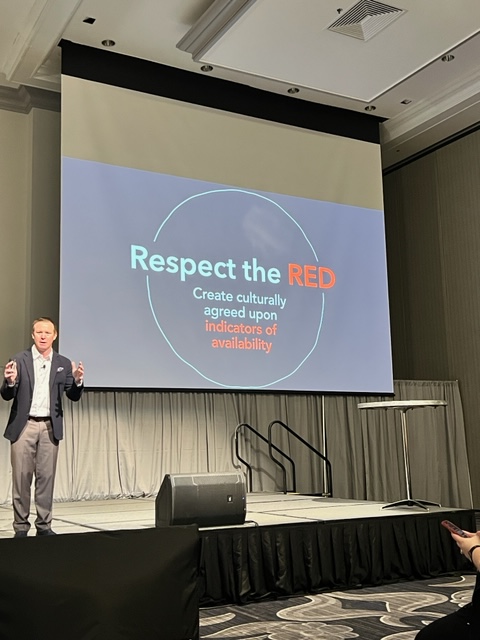
We discussed the fact that this is a societal change – meaning as organizations, our business models need to change. If you weren’t already, you had to shift to be a digital organization very quickly. As CEOs, we should be the ones to decide what the future holds for our organizations. We set the course for the future, rather than reacting tactically to trends.
Selfishly, I was excited that our morning ended with the conversation landing on research. Quantitative and qualitative research of not just employees, but all stakeholders. And specifically, attitudinal research. Uncovering insights, thoughts and feelings that allow us to understand and connect with our members at a much deeper level. Having this connection and appreciation is key for the future success of all associations. Without it, we’re leading as CEOs with blinders on.
Sharing the insights gleaned from the last two years of our attitudinal segmentation studies is exciting. And it’s always eye opening for all those who review the data. We’ve published it and made it available for all to all to see We’re excited to launch our 2022 attitudinal research study and would love to have you take part in it, too. Get answers, collect insights — and arm yourself with data that can help you to make an impact in your organization! Sign up today and you’ll be able to help us craft this year’s survey!
As an established regular on the association conference circuit, there are a lot of things I miss about the bygone days of in-person events. Dynamic speakers, lively discussions, handshakes, and business card exchanges. But one of the things I miss MOST is the laughter. Getting a group of enthusiastic, like-minded professionals in the same space is almost always guaranteed to elicit good humor, and, in my world anyway, it’s one of the best perks of the job.
The last year has dealt a crushing blow to associations that rely on in-person conferences and networking events, and to the members who value them as an integral piece of their career and professional growth. For some members, the transition to virtual events was a hurdle they just couldn’t clear. Why? Because even though virtual events can convey the same level of information and learning, many are sadly lacking in the human connection that makes these events a worthwhile and memorable experience.
In short, they’re missing the “funny”.
I’ve felt this acutely in my own professional life over the last 12 months. As someone who places a lot of importance on one-on-one relationships, the lack of face-to-face interaction and connection with my clients, team members, and industry colleagues has left a pretty significant gap. The resulting feelings of isolation and disconnect have, at times, felt like insurmountable obstacles. I didn’t realize how much I laughed with those in my professional circle until that laughter was gone.
Its absence was deafening.
It seems a pretty logical leap to think that many of your members are feeling the same way. In the last year, they’ve dealt with the shift to remote work, the uncertainty of a global pandemic, social unrest, and far-reaching impacts on their industry and even their career. And really, it’s no laughing matter.
But what if we laughed anyway?
Recently, I challenged myself to bring back the laughter and find the funny with my staff of now remote employees. They’re a pretty fun bunch on the whole, but a year of Zoom meetings and Google chats has taken its toll. I sought out some expert help and brought the funny to them. We found that laughter really is the best medicine… even when it’s virtual laughter.
I invited Dr. Lynn Shaw, an associate professor of social work at the University of Indianapolis, to join us via Zoom for Willow Wednesday, a weekly meeting we use to talk shop and connect with our colleagues. This session was unique, however, in that Dr. Shaw was joining in to lead us all in a session of laughter yoga.
Dr. Shaw is experienced in the practice of laughter therapy, pioneered by Dr. Lee Berk, a research professor in the school of medicine at Loma Linda University. Dr. Berk has long believed that laughter reduces stress-inducing hormones in our bodies, leading to improvements in both mental and physical health. Laughter therapy takes patients on a journey to find their funny by asking them to first produce artificial laughter. This “fake it ‘til you make it” approach often leads to genuine laughter, and eventually, an easing of the weight that keeps us from embracing the joy in life.
Besides being good for our minds and our spirits, laughter is beneficial to our bodies as well. It improves our breathing, sending more oxygen into our blood, increases circulation which benefits our cardiovascular health, and gives our core muscles a workout.
While our session started out with a few awkward chuckles, it ended in genuine belly laughs. Our willingness to be silly and have fun together helped us overcome our inhibitions and reconnect in a way we’d all been missing.
You might be wondering how this is applicable to your membership. While you certainly should be focusing on meeting members’ professional needs right now, it’s important to remember that they are human beings in need of human connection and have been dealing with very human emotions during this last tumultuous year. Plus, laughter is free and extremely contagious (in a good way), so there’s very little risk in incorporating some fun into your offerings. Here are a few ideas to get you started:
Remember, the world around us has changed and virtual interactions will never fully replace human connection. (Nor should they!) But you can work to humanize virtual events for your members, and create an environment that promotes fun and encourages laughter. A line I read recently in a Harvard Business Review article really struck me:
"[...] a culture of kindness, fun, and cooperative collaboration is just as important to the bottom line as your daily to-do list. Organizations should understand that being nice to each other, chatting, and goofing around together is part of the work that we do. The spontaneous, informal interactions at risk in hybrid and remote work are not distractions or unproductive. They foster the connections that feed productivity and innovation — these interactions are the soil in which ideas grow."
Help your members grow by giving them opportunities to find their funny, laugh together and create real, authentic connections… even in a virtual world. And when it’s hard to see the humor in our current situation?
Laugh anyway.
Want to learn more about how your association and your members can thrive in the remote work era? Willow Marketing is here to help guide you. Contact us today for insights and strategy, and keep an eye out for future installments in our Associations at Work (from Home) series.
The world doesn’t work the way it used to… literally. For years, digital nomads, freelancers, and independent contractors have been predicting the rise of remote work, but as HubSpot points out in its 2020 Remote Work Report, there’s a key difference between traditional remote work and working remotely.
Remote work is a lifestyle usually adopted by choice. Working remotely was a scenario forced on more than half the U.S. population due to the rise of the global pandemic. So while the work-from-anywhere set was already used to navigating new technologies, dependency on Wi-Fi, and managing disconnect and isolation, a large percentage of your membership likely found these new challenges thrust upon them.
For many associations and individual members, 2020 was the year of surviving. The good news? That makes 2021 the year of thriving. But in order to bounce back better than ever, and help your members do the same, you’ll need to evolve along with their needs, providing them with consistent value and dynamic benefits that grow along with them. Here are some of our tips on serving your members in the age of working remotely:
Keeping a close eye on your data is always advised, but the numbers don’t always tell you how your members are feeling, or what’s keeping them up at night. To get the full story, you’ll need to take a qualitative approach. Ask members about their struggles, their worries, and their needs. Send out short email surveys, house polls on your blog and website landing pages, or create a popup. Members want to be heard, and if you give them a platform to speak out, many will take advantage of it. Remember to keep surveys short and sweet (so hone in on a narrow focus for each one). Multiple choice, dropdown, or scale rating questions typically garner more engagement, but you’ll also want to allow space for members to give optional feedback in their own words.
The key here is listening to what they have to say and adjusting your services accordingly. Did a majority of members indicate a dislike for online learning or networking events? Take a look at your platform and evaluate the user experience. There may be easy tweaks you can make to serve your members in a better way.
This one seems counterintuitive, especially for associations feeling the financial sting of the COVID-induced economic downturn, but many organizations are finding great benefit in offering free or reduced memberships across their industry to welcome and support new professionals.
Not only do free or trial memberships bring in fresh blood that may someday become full-fledge dues-paying members, but it also increases engagement and boosts SEO, bringing more organic search traffic to your website, and more attention to your association’s offerings.
Even if free or reduced memberships aren’t right for your organization, consider ungating important and relevant content on your website, like infographics, white papers, and ebooks, or offering a one-time free e-learning course to allow non-members to get a taste of the value you provide.
Advocacy is likely already a big part of what you do, but now, it’s more important than ever. Your members need you to be a leader in your industry as they navigate the fallout of the economic crisis, deal with waning job opportunities and faltering growth trajectories, and battle the uncertainty of their future in your field. This is the time to step up and use your voice to impact change across your industry. Members want to hear about trends and best practices, particularly as they shift in the wake of the pandemic. Be their trusted authority on what they can expect in the coming months, and how they can adapt and adjust their work style to keep up.
Be sure to offer industry-specific guidance and best practices that are thoroughly researched and scientifically sound. Help them create a business continuity plan, offer crisis communication templates, and keep them updated on how changing health codes and regulations impact their work.
Your members have already had a long year of adjusting to working remotely, but it isn’t over yet. Some members may find their company’s extending work-from-home dates, or even remaining remote indefinitely or permanently. Others face an equally large hurdle as some businesses begin to open back up, and they find themselves back in the office for the first time in months.
Creating educational resources around remote work will benefit all members in our current climate. Whether it’s a webinar to instruct them on building a remote work culture, or a mental health checklist to help them avoid burnout, meeting their specific needs as they relate to your industry in the remote workspace will build trust and respect.
Make sure all information you provide is up-to-date and relevant to your industry. For example, AssociationsNow offers a real-time coronavirus tracker that includes the latest infection rates, along with meaningful content on topics that matter to remote members, like the broadband gap, or ongoing travel restrictions. ASAE offers an Issue Roundup with advocacy updates, research studies, virtual content, and more so members stay updated and connected while also staying socially distant.
The last year has been a challenge for both associations and their members, but there are opportunities to be found, even in the midst of the uncertainty. Being adaptive and supporting your members not in the way you think they need, but in the way they tell you they need you, will position you as a trusted resource and vital support network as they navigate the remote life… and beyond.
Want to learn more about how your association and your members can thrive in the remote work era? Willow Marketing is here to help guide you. Contact us today for insights and strategy, and keep an eye out for future installments in our Associations at Work (from Home) series.
These are certainly unprecedented times. Nothing that I’ve ever seen before in 28 years of business. We started Willow in the 1992 Recession, and we lived through it. We managed through the downturn in the early 2000’s. And we successfully navigated the 2008 recession. Is what we’re experiencing today any different?
Well of course it is. Businesses are shutting down. Schools are closed. We have the fear of shelter in place and quarantines. And we’re all finding our new normal with “work from home” arrangements. We’re all experiencing a heightened level of concern and stress. But in many ways it’s not. We’ve been here before (minus the pandemic.)
So what words of wisdom can I share? Simple. Be positive and pivot. We’re all in this together. WIth these crazy changes comes opportunity. And we’re a nation of risk-takers, opportunists, and entrepreneurs. So let’s pivot and do something about it.
From a marketing perspective it can be scary. But here are a few tips:
Give them the attention and love they need. Be helpful to those that have been with you the longest. Sure, you should always be doing new business development, but 60 - 70% of your new business should come from existing customers.
Use this as an opportunity to better understand them. Find out what’s keeping them up at
night. Have their needs changed? I bet they have. Study their behaviors and how their buying has changed.
I hope you’ve already been doing this. Now’s the time to pull out those analytics and study them. If you don’t have analytics in place, do so. Track your conversion rates. If something's not working, change it. Test. And pivot again. You can do it! And don’t abandon efforts. Some are seeing the highest click through rates they’ve ever had right now.
What was working may not be working anymore. As we’re all working from home, we’re spending more time than ever before online – both for business purposes and to pass the time. Now’s probably a pretty good time to reassess where your audience is and determine new ways and tactics to stay in front of them.
Now is the time to be investing in marketing. Don’t take my word for it. Here’s a great article from Harvard Business Review. It’s from April of 2009 after the 2008 recession. Why? Because history does repeat itself. Please take some time and read it. Here’s a quote: “On average, increases in marketing spending during a recession have boosted financial performance throughout the year following the recession for businesses...”
So, what do you do when all of your meetings have been canceled? What do you do when all your events have been postponed? What do you do if the business plans you put in place are now all canceled? You pivot. There are ways to stay in front of your customers, prospects, and members. But it will require you to pivot.
Implement webinars and if you haven’t already. Start blogging and creating content. Online paid advertising is more than likely a place for you to be as well. Now is the time to brush up on best practices for Linkedin and other social media. Now is the time to maximize your efforts on email marketing. Now is the time for you to invest wisely in marketing efforts.
Now is the time for you to be positive and pivot. And be smart, be compassionate, and be helpful.
Need help or want to talk though some ideas that might make sense for you? We’re here to be helpful. Let’s chat.
They say the clothes make the man. If that’s true, we can also say the reviews make the business. Like a crisp blazer (or a rumpled old t-shirt), reviews are often the first thing people see when searching for your business. And like clothing, customers use reviews to make judgments and draw conclusions. Are you put-together and dressed to impress, or sloppy and unconcerned with outside opinion?
There’s just one catch: while you can easily change your clothes, you can’t always change your reviews. And now, Google is implementing some changes that may make it even more difficult for customers to see the best version of you.
Here’s what you need to know to help your business look its best:
Google is eliminating Review Rich Snippets for local businesses. This is what determines how many stars show up under your business’s Google listing. The goal with this is to protect the consumer -- Google can’t guarantee that local sites’ reviews are genuine and unaltered, so they’re getting rid of them altogether.
What it means:
You can still use a widget or third party to aggregate reviews on your website, but your stars from these ratings won’t be visible under your Google listing.
This change puts even more influence on outside review sources like Yelp or Tripadvisor. Sites like these are unaffected by the change because Google sees them as “not self-serving.”
What it means:
If you want to get ahead, you’ll need to invest more time in managing your reviews on third party websites. Responding to reviews -- even and at times especially the negative ones -- improves your visibility and shows that your business is active, involved, and committed to customer satisfaction.
Another big change from Google is the decision to filter out local businesses that have reviews lower than four stars from search rankings.
What it means:
Stay on top of your Google reviews. Solicit positive reviews and create a user-friendly process for customers to rate your business. Again, respond to negative reviews and attempt to resolve the situation.
If this sounds overwhelming, you’re not alone. Managing reviews can be an overwhelming task for a small business, but it doesn’t have to be. At Willow Marketing, we’re designing customized Review and Recommendation packages to help you handle your business’s ratings and improve your ranking. We’re creating a seamless, natural way to streamline the process, giving you an automated, hassle-free way to look your best… even online.
Last month, I was honored to present to association professionals at ASAE19, in a session I co-led with Hilde Marnul from the Board of Certification for Emergency Nursing. I consider Hilde and her organization as a client, a friend, and a rebranding success story. But the prospect of rebranding can be a daunting challenge to many organizations. Some don’t understand the purpose of a rebranding campaign, and some may not think they need it.
It’s important to understand that brands go through a life cycle, which varies based on the product, services or needs of the audience. At some point, all brands will fall out of relevance, and will require a refresh to make them once again compelling. This can be as simple as updating mission, vision and tone, or as comprehensive as an entirely new look and feel. On average, full rebrandings are necessary every 7-10 years. It had been 37 years since BCEN had addressed its brand, so it was long overdue!
If you’re at the end of your brand’s current life cycle, it might be time to shake things up. Here, I’ll outline 10 steps that will give your brand a new lease on life.
Let’s say your brand is in a mason jar (trendy!). When you’re inside the jar, you can’t read the label… but your audience can. You must step outside the jar to see what’s on the label, and compare it with what you know is on the inside. In the gap between these two perceptions lies your ideal brand.
When customers or clients give you feedback, listen. Not just to their words, but to the things they don’t say. You may not agree with their perceptions, but when you really hear them, you can start to make judgments about what your brand needs to be.
Don’t forget to check in with your employees, board and others close to the organization for their input. Often, they have a unique perspective you can tap into, if you involve them in the rebranding process.
Brand archetypes are used to outline and explore the traits and qualities that contribute to your brand. Are you the Sage, spreading knowledge and wisdom, or the Citizen, advocating for what’s right and standing up for your members? Conduct some exploration into the 12 archetypes and find out who you are… and who you want to be.
These are vision, values and voice, and they are imperative to resetting your brand in a way that aligns with your business and with your audience. Keep your vision bold and succinct. Live your values. And speak with the voice the reinforces your brand, using carefully chosen language to communicate your message.
Once you’ve carefully put together your vision, values and voice, make sure your employees are on-board and fully versed in how to speak about and for your brand. Set up training sessions, create guides and how-tos, and more than anything, help them get excited for the new brand.
You’ve put in the time and energy to research and reshape your brand, so now it’s time to put it out into the world! Determine how and where your rebrand will launch -- your website, social media, at a convention -- and then make sure you set aside a robust budget to give it the rollout it deserves.
Create a sense of consistency by changing your physical space, updating signage and proudly displaying new logos, color pallets and more.
Make sure the assets you’re creating for your refreshed brand deliver on your new vision, values and voice -- and that they are funneled through the appropriate channels to hit your audience.
Two things that might be hard to come by, but make all the difference in the success of your rebranding. Anticipate around six months’ investment for a full rebranding, hours for necessary staff, and a healthy marketing budget.
This is a simplified overview of the rebranding process, but if you’re still in the consideration phase, this should help you understand whether or not the time is right for a revitalized brand. If you’re looking for help with your organization’s rebranding, contact us. And, be sure to check out a recap of my branding presentation. You’ll also be able to download our Communications Audit worksheet to use in your organization, as well as we share our Culture Worksheet, an activity that will help you to better identify your organization's values.
I’m about to vent my spleen and rant a bit, so strap on your safety goggles, internet masses. I am about to rip into something in desperate need of a good ripping. I also want to preface this rant with the comment that I do not loath social media in all its forms and I have no desire for it to fall into the obscured, faceless abyss of the internet’s lost memories. That being said, I’ve got a serious bone to pick with some people on LinkedIn, and while it’s not all of them, their numbers seem to grow by the day. Yup. I’m talking about unsolicited LinkedIn connection requests.
I’m well aware that culture is an ever-evolving entity, and internet culture evolves at an even faster rate. I feel like Clint Eastwood yelling at kids to get off his lawn in Gran Torino by even bringing this up, but if nobody upholds standards of common courtesy and respect, then they will dry up and blow away like so much dust in the wind. Wow. I fit several allusions in there. My point remains true regardless: unsolicited connection requests (UCRs) are the true bane of LinkedIn, and there is no reason whatsoever that they have to be that way.
While I am fully cognizant that the purpose of a social network is to connect with others with whom we share common traits and characteristics, this does not mean I am in any way obligated or have any desire to connect with them in the first place. I’m not antisocial in the least, but I dang sure don’t have the time to manage a large circle of friends and business acquaintances/contacts.
Why do I bother with LinkedIn then? Primarily because it’s a professional connection site, so in my line of work, I may occasionally use LinkedIn and reach out to potential clients and others that may have a need for the products and services I offer. I’m not selling though, just looking for introductions and the shared benefits of open two-way communication. I have also used LinkedIn in the past to do potential client research to get a feel for the people they employ and how they run their business. I do not, however, send them cold emails or connection requests suggesting we meet up for a deal. It’s just not how I operate.
Despite my personal code of social media ethics, it seems a vast legion of marketing groups and lead generation sites have no compunction whatsoever about spamming the hell out of my LinkedIn mailbox with UCRs. Experts on work-related stress state that the more work-related email you look at per day, the more stressed you will become over time. These messages may not add a significant amount of stress (*cough* Select All->Delete cough*), but there is always the underlying fear that when I do mass dump my inbox that I am trashing potential legitimate requests. It’s infuriating with a side serving of fear-of-missing-out. There are far more serious reasons this sort of spam is bad business though.
Believe it or not, there are laws governing what marketing agencies can and cannot do, and one of those limitations deals directly with sending unsolicited direct messages to people with which you possess no prior relationship. Marketing agencies aren’t even legally allowed to add people to their newsletter email lists involuntary or without specifically requesting someone joins of their own free will.
Not only is this a direct violation of digital marketing laws, but it also starts your relationship with your prospective customer off on entirely the wrong foot. If you walked up to 100 strangers in a mall and tried to sell them something, some of them are going to make a purchase. The vast majority of those 100 people are going to make a potentially violent suggestion regarding where you can stick that product or service.
Yes, you close some sales by walking up to strangers and pushing the hard sell, but by and large, you are developing a reputation as desperate, sleazy, underhanded or some unholy trinity of all three. No matter how confident you are in your abilities, creating a bad impression by randomly approaching potential buyers is only going to damage your potential for long-term repeat business.
First off, nobody likes spam, and there are far-reaching laws on multiple continents that ban the practice. UCRs on LinkedIn are a slightly evolved version of spam. Stop it. STAHP. Nobody likes UCRs. Don’t do it.
Instead, you need to find the right collaborative groups online and start building relationships there. Get to know people, learn their stories, learn everything you can about how and why they do what they do and have kept on doing it. Get curious, don’t be pushy, and remember, any relationship worth maintaining requires time and effort to make it work. You don’t have to play golf or go for drinks with them but expressing interest in what they do and striving to learn what they may have to teach you is critical to successful networking on any social media site.
Not familiar with the conventions and common courtesy of correspondence? Read a book or check out some blogs online that can give you a crash course in etiquette for the digital era. We may have developed most of these social norms decades ago, but they are no less effective online than when they were printed or written long-hand on paper.
Find successful people you admire and get to know them, even if it’s only reading what they write or following their career online. Above all, remember you are someone worth knowing, too. If you don’t feel like you are, you need to work on building your confidence. Once you’re ready though, you will find that genuine human interest, observing good communication etiquette, and shared respect are going to bring in far more new clients than a sling-crap-at-the-wall-and-see-what-sticks UCR scheme.
The morning commute...most people have one, whether short or long. A consistent chunk of time that you can devote to a number of things to start your day off right. Do you tune in to a morning talk show to get a laugh? Do you listen to an educational podcast? Do you pick up listening to your latest audiobook? Up until a few years ago, my morning commute was inundated with the chatter of a radio morning show. One morning I decided to just turn off the radio and sit in silence. The results were so positive, I have made the silent commute my morning ritual. Here is why I wouldn’t trade my tranquil commute for any podcast, book, music or radio show.
Silence and doing nothing are counterintuitive to a culture based on productivity. Besides the drive to learn more, do more and be more, we are surrounded more than ever with electronic stimuli. For all the amazing things that smartphones can do, apps, texts and email notifications alone are enough to exacerbate anxiety.
That doesn’t even take into account your own thoughts buzzing through your head. Many researchers have estimated that we have anywhere from 50,000 to 80,000 thoughts per day, but are still grappling with the concept that we have multiple thoughts at multiple levels at the same time.
It turns out that being plugged in all the time is detrimental to your mental health because it creates a constant state of stimulation. Noise puts your body in a stressed state, but silence relieves that stress. Noise pollution from televisions and radios causes a host of bad effects on the body like high blood pressure and increased levels of cortisol.
Your mind needs quiet time to recover from constantly processing stimuli. In fact, there is a theory called Attention Restoration Theory which seeks to explain how and why our ability to focus is fatigued and how to recover from that fatigue. Studies around the Attention Restoration Theory found that quiet is essential to recovery, with a quiet walk in nature offering the most intense regenerative effects. And while you probably don’t have the luxury of taking a nature walk on your way to work, you can still benefit by riding in silence and noticing any nature that you see out your car window.
Your brain needs silence to do its own internal tidying up. Silence allows you to hear your own thoughts instead of being busy receiving and sorting through the thoughts of others. Imagine your mind is like your house and you have a busy day ahead of you. You go into your kitchen to cook a meal and as a result, your pots and pans are dirty. Before you have time to clean the kitchen, you have guests coming over so you quickly shove shoes, toys and clothes from the living room into the closet. Then, the guests arrive and you are busy talking and entertaining them long into the night. You fall asleep late at night. The next morning, you wake up and your house is a wreck. At this point, you can choose to take some time to get your home in order or to start the whole process over again. People who choose to repeat the process again are like people who don’t prioritize quiet time. Their mind becomes chaotic and untidy because they are always subject to external stimuli. At some point, your brain function suffers because you don’t give it time to sort itself out. Taking time out of each day to be quiet allows you to tidy your mind and keep it operating at its full potential.
Think of your morning commute as the perfect opportunity to practice mind care. Just as you eat healthy foods and exercise to keep your body healthy, your brain needs its daily dose of silence to stay healthy and functioning well. As Abraham Lincoln said, “Give me six hours to chop down a tree and I will spend the first four sharpening the axe.” Without taking time to sharpen your mind, you will experience more stress and reduced mental capacities. Several studies done on middle and high schoolers showed that implementing a mandatory quiet time for students and teachers improved academics as well as behavior.
So give your brain a chance to surprise you this week. Commit to a silent commute for just five days and see how it affects you. What should you expect from your quiet time? Well, don’t be surprised if you are uncomfortable at first. Many people are so used to constant noise that silence can make them feel strange and even anxious. But if you can get past the initial shock of silence, your mind will begin to do some amazing things. Old memories that you haven’t thought about in a long time may resurface. Profound realizations about your life may present themselves in the silence. You may be surprised to find the solution to a problem or issue come bubbling to the surface of your mind once you have cleared away the rest of the noise.
